
Arizona’s official monsoon season has ended, but roof maintenance shouldn’t wait until next summer. Fall and winter storms can still expose existing leaks, damaged roofing materials, and drainage problems.
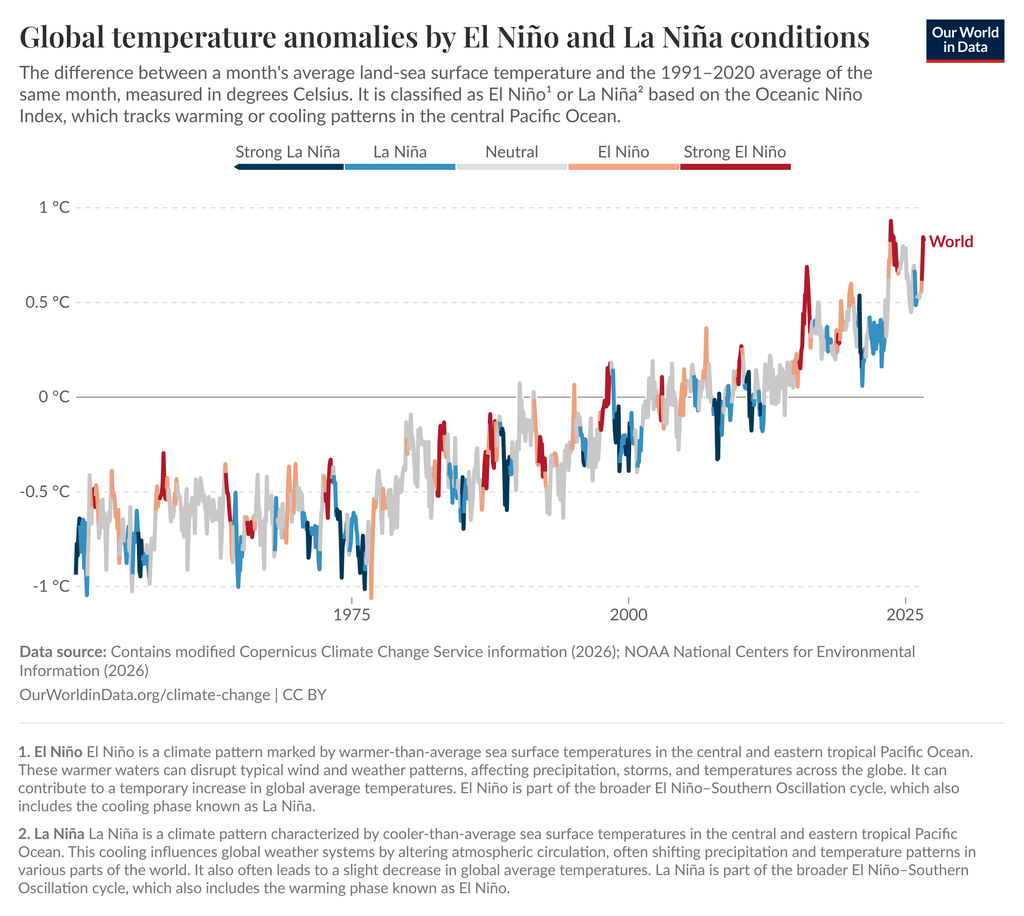
Especially this year. El Niño is adding another big reason to pay attention. In its October 8, 2026, update, NOAA’s Climate Prediction Center forecast a strong-to-very-strong El Niño through January–March 2027.
NOAA also reported an 83% chance of historic El Niño strength during October–December 2026, based on its tropical Pacific temperature index. That doesn’t mean Phoenix has an 83% chance of record rainfall—it means there’s an 83% chance El Niño will reach historic strength.
For homeowners, landlords, HOAs, and property managers, the takeaway is preparation, not panic. Last weekend, the entire valley experienced heavy rainfall, roads were closed, and some Arizonans received flash flood notifications.
You don’t need a new roof just because there’s a ‘Super El Niño’ in the forecast, but we recommend taking time to learn how to prepare and to assess the condition of the roof you already have.
Table of Contents
What El Niño Could Mean for Metro Phoenix
El Niño is a recurring warming pattern in the tropical Pacific that can influence weather far beyond the ocean. Its effects vary by location and event, but it generally favors increased cool-season precipitation across the southern United States. A strong event does not guarantee more rainfall than usual this winter in every community. cpc.ncep.noaa
A seasonal climate outlook from experts won’t tell you exactly when a storm will arrive, how much rain your neighborhood will receive, or whether your property will develop a leak or have other problems.
El Niño isn’t a prediction or a reason to worry about your roof or home. Use it as a reminder to review maintenance records, address known problems, and follow local National Weather Service forecasts as storms approach.
How Prolonged Rain Can Expose Roof Problems
The practical concern is not whether winter rain is always worse than monsoon rain. It is whether your roof has an existing weakness or drainage problem.
A roof inspection should look beyond what is visible from the street. Icon Roofing’s inspection process includes flashing, roof penetrations, drainage, roofing materials, and signs of interior moisture—components that help determine where maintenance or repairs may be needed.
Different roofing systems require different checks:
- Tile roofs: Look for cracked, broken, or displaced tiles, along with flashing and underlayment concerns beneath the tile.
- Shingle roofs: Check for missing or damaged shingles and deteriorated details around penetrations and roof transitions.
- Foam roofs: Evaluate the protective coating, penetrations, visible damage, and drainage. Spray polyurethane foam is a seamless system, so its maintenance needs differ from those of roofs with membrane seams. iconroofingaz
The goal is to identify specific problems—not assume that every older roof needs replacement or that every newer roof is trouble-free.
Roof Preparation for El Niño: What Property Owners Can Check
Start with observations you can make from the ground and accessible indoor areas. Leave roof access, tile handling, flashing repairs, and coating work to a qualified roofing professional. Icon’s inspection guidance warns that walking on a roof can damage roofing materials and create safety risks.
Review the roof’s history
Gather information about:
- Previous leaks and repairs.
- The roof’s installation date, if known.
- Inspection and maintenance records.
- Foam-roof coating maintenance.
- Recurring drainage problems.
- Any unresolved repair recommendations.
These details give the inspector useful context and help keep the conversation focused on the property’s actual condition.
Look for visible warning signs
From a safe location, note visible missing or displaced roofing materials, debris near drainage outlets, and evidence of gutter overflow. Indoors, document ceiling stains or other signs of moisture so the contractor knows where to investigate. These observations complement—not replace—the component and interior checks included in a professional inspection.
Have drainage evaluated
Ask the inspector to check gutters, downspouts, scuppers, and roof drains, where applicable. For low-slope and foam roofs, include any areas where you have previously noticed standing water.
Dry weather can make drainage concerns less noticeable. A professional evaluation should determine whether the system needs cleaning, maintenance, or repairs rather than assuming every area of standing water has the same cause. Icon includes drainage evaluation in its inspection scope.
Address repairs appropriate to your roofing system
Avoid treating all roof maintenance as a sealant job. Tile, shingle, foam, and membrane systems have different components and repair requirements.
For foam roofs in particular, maintenance should account for the protective covering specified for that system. Ask the contractor to evaluate its condition and explain any coating recommendation.
Who Should Prioritize a Roof Inspection?
Prioritize a roof inspection if your property has a known leak, visible damage, unresolved maintenance concerns, or an uncertain repair history.
The most useful inspection produces clear findings and recommendations. Icon’s published inspection process includes evaluating roofing components and identifying repairs or maintenance needs.
Age can be part of that discussion, but it should not be the only factor. Instead of asking only, “How old is my roof?” ask:
- What condition are the roofing materials in?
- Are flashing and penetrations properly maintained?
- Does the roof drain as intended?
- What needs attention now?
- What can be monitored or planned for later?
Those questions help distinguish an immediate repair from routine maintenance or longer-term replacement planning.
What Landlords, HOAs, and Property Managers Should Do
For managed properties, use the inspection process to create a documented maintenance plan.
Before scheduling work:
- Review previous leak reports and repair invoices.
- Confirm which roofs and drainage components you are responsible for.
- Identify buildings or units with recurring concerns.
- Arrange access if an interior inspection is needed.
- Establish a clear process for residents or tenants to report leaks.
After the inspection, request written findings, photographs where available, and a prioritized scope of work. Separate immediate repairs from maintenance items and future projects.
Icon provides roofing services for HOAs and multifamily properties in Metro Phoenix, making this a useful opportunity to coordinate inspections across a community rather than handle each concern in isolation.
Frequently Asked Questions
Will El Niño definitely mean a wetter winter in Phoenix?
No. El Niño generally favors increased precipitation across the southern United States, but local outcomes vary. NOAA cautions that even a strong event’s effects aren’t guaranteed.
Does NOAA’s 83% forecast mean Phoenix has an 83% chance of record rain?
No. In the October 8, 2026, discussion, that probability refers to El Niño reaching a historic-strength threshold during October–December 2026. It is not a forecast of Phoenix rainfall totals or the likelihood of roof damage.
My roof made it through monsoon season without leaking. Do I still need an inspection?
A leak-free season does not tell you the condition of every roof component. If maintenance is overdue, the roof’s history is unclear, or you have noticed damage, an inspection can evaluate flashing, penetrations, drainage, and other areas that may not be visible from the ground.
Does El Niño mean I should replace my roof?
No. A climate forecast is not a roof assessment. Start with an inspection and ask for recommendations tied to documented conditions. Icon’s inspection process identifies maintenance and repair needs rather than treating every inspection as a replacement decision.
What should a foam-roof inspection include?
A foam roof inspector should evaluate the protective coating, penetrations, visible damage, and drainage. We also look for debris and confirm your roof is weatherproof. Foam roofing is a seamless system, and its protective covering is an important part of the specified roof assembly.
Are Icon Roofing’s inspections free?
Icon’s published inspection fee is $75; we waive the fee if you proceed with a roof repair or replacement through Icon Roofing. iconroofingaz
Stay Icon Dry™ This Winter
You cannot control the winter forecast, but you can get a clearer picture of your roof’s condition.
Icon Roofing provides roof inspections, repairs, and replacement services for residential, light commercial, and multifamily properties in Mesa, Scottsdale, and nearby Metro Phoenix cities. An inspection can help identify existing concerns and set practical next steps before you deal with an active leak.
Schedule Your Roof Inspection
Call (480) 427-7600 or contact Icon Roofing online to discuss your property and schedule service. Roof inspections are $75, with the fee waived if you move forward with a repair or replacement through Icon Roofing.
Office and showroom: 2150 E Brown Rd #4, Mesa, AZ 85213.
Weather information reviewed October 30, 2026. Seasonal outlooks can change; consult NOAA and the National Weather Service for updated forecasts.
See Also – Educational Content and Weather Forecasts
Frequently Asked Questions about El Niño/La Niña
Technical discussion of El Niño’s oceanic and atmospheric conditions – global impact




0 Comments